Ear Scuba Diving Tips:
Tips to Help You Clear Your Ears
And Equalize
If you have problems equalizing, we have some ear scuba diving tips for you to try.
As we all know, if you can't clear those ears, there won't be any diving.
Equalizing problems are not all that uncommon and I have seen many a diver have trouble getting down on their first try. It can be very frustrating - not to mention painful.
Hopefully these tips on how to clear your ears will make your descent easier and safer.
The most common method of clearing your ears is called the Valsalva maneuver. To perform this, you close your mouth, pinch your nostrils closed and gently blow through your nose.
If you are a certified scuba diver, this is the basic method they teach you in class. And it does work for many people.
However, if you are having problems, try these ear scuba diving tips to help you descend safely:
Start on the Surface
Descend Feet First
If you are descend with your head first, it affects the Eustachian tube and makes it harder to equalize your ears.
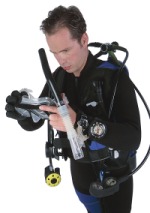
If you are descend with your head first, it affects the Eustachian tube and makes it harder to equalize your ears.
This should be familiar from your scuba certification class. We are taught to begin equalizing as soon as your head goes underwater and continue equalizing every few feet.
However, as stated above, I would take it one step further and begin equalizing before you even go under. Pinch your nose and blow through your nose while you are still on the surface.
Then once you go under, continue equalizing all the way down. Don't stop even if you have equalized. Keep on blowing until you have reached your desired depth with clear ears.
This is probably the most important step to descending without ear problems. If you are having problems clearing one ear, tilt your head - with the blocked ear toward the surface.
If your ears are not clearing properly, ascend a few feet to reduce the pressure. Try clearing them again. If it still doesn't work, ascend a few more feet and try again. Rinse and repeat until you have cleared your ears successfully.
If you have tried ascending and it is not working, abort the dive. If you force yourself down, you can cause permanent ear injury.
In this same vein, if you are using the Valsalva method, do not blow forcefully. It should be a gentle blow. A forceful blow can also cause ear injury. It's better to forego a dive than have ear problems for the rest of your life. Probably the most important ear scuba diving tip to remember.
Another mantra you probably heard in your certification class. Congestion can make equalization difficult. And even if you are able to descend, you run the risk of having problems during ascent, a condition called "reverse squeeze." This can also be caused by medications wearing off during the dive.
I know many divers take cold medicine and dive anyway. Just be aware of the risks if you take this route.
Below are a couple of sources for more technical ear scuba diving tips.
I haven't gone into the more technical/medical aspects of ear pressure. You can find plenty of information online. One good article which goes into depth can be found here.
A great video presentation on clearing your ears during scuba diving is given by Dr. Edmond Kay from the University of Washington. It has everything (and more) you wanted to know about ear problems. It is definitely worth a look if you are having trouble. Be warned, though, it is long - just under an hour.
There are several other techniques besides the valsalva to equalize ear pressure, a discussion of which can be found in the article and video cited above. Practice them to see which one works best for you.
Hopefully these ear scuba diving tips will make your dive more comfortable. Just remember to take it easy and take it slow. You should be able to get down there safely.
If you would like even more practical tips and advice to help you get down safely and painlessly, please check out our Special Report "How To Get Your Ears To Pop". Click here for all the details.

We also have many more pages of scuba diving tips you many find helpful:
Click Here for a Complete List of all our Scuba Diving Tips
Short Video Tips on Air Consumption
Short Video Tips on Buoyancy Control
Want to stay down longer and improve your buoyancy control and other diving skills? Our free report "Increase Your Bottom Time" along with our practical, weekly actionable tips will have you looking like a seasoned diver in no time. So come join us and see improvement on your very next dive!
(Click on the photo to join us now!)

What's New


-
Happy New Year
Jan 01, 24 06:00 AM
Happy New Year everyone! I hope everyone is well and had a fun New Years Eve! May your new year be filled with lots of wonderful dives. All the best to you and yours in 2024! Let the dives begin. -
Happy Holidays
Dec 14, 23 05:05 AM
I hope everyone is enjoying the holiday season! I am always amazed at how fast time flies and another year is just around the corner. I wanted to pop in and say hi to everyone. I am doing some full ti… -
3 Common Scuba Diving Mistakes New Divers Make
Feb 23, 23 02:18 PM
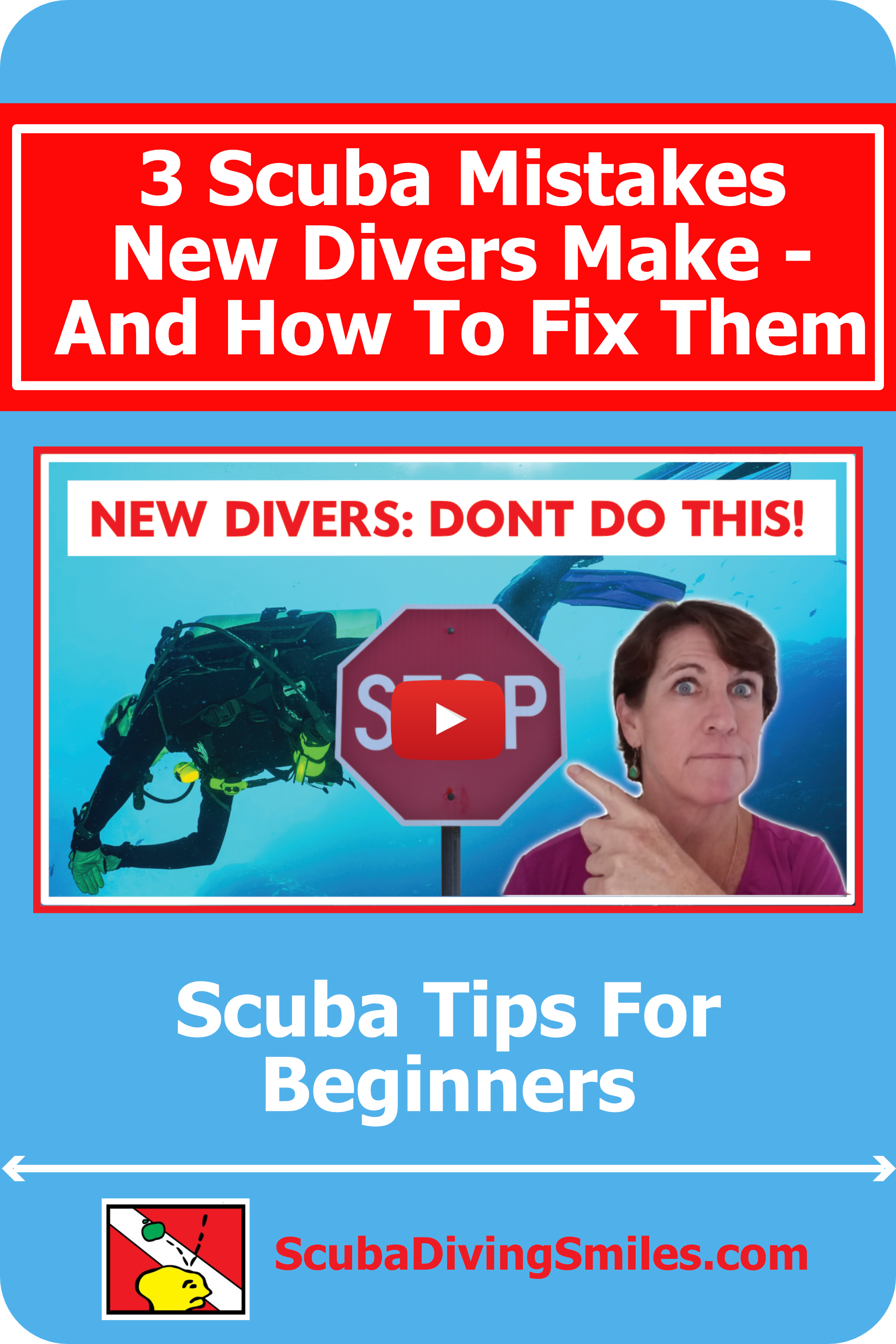 In this video, I share 3 common scuba diving mistakes beginner divers make. Learn how to correct these for a better - and safer - dive.
 -
Scuba Diving Tipping Etiquette: How Much And When To Tip Scuba Crew
Feb 06, 23 03:34 PM
 Not sure of scuba diving tipping etiquette? In this video I share who to tip, when to tip, how much to tip, tipping on liveaboards, tipping an instructor & more
 -
Scuba Diving Tips For First Time
Jan 29, 23 05:41 PM
 These scuba diving tips for first time divers will help improve buoyancy control, air consumption, equalization and boat diving. Improve on your very next dive!
Click below to grab our free report and weekly actionable tips:

Popular Pages
 |
 |
 |
 |
Recent Articles
-
Happy New Year
Jan 01, 24 06:00 AM
Happy New Year everyone! I hope everyone is well and had a fun New Years Eve! May your new year be filled with lots of wonderful dives. All the best to you and yours in 2024! Let the dives begin. -
Happy Holidays
Dec 14, 23 05:05 AM
I hope everyone is enjoying the holiday season! I am always amazed at how fast time flies and another year is just around the corner. I wanted to pop in and say hi to everyone. I am doing some full ti… -
3 Common Scuba Diving Mistakes New Divers Make
Feb 23, 23 02:18 PM
In this video, I share 3 common scuba diving mistakes beginner divers make. Learn how to correct these for a better - and safer - dive.
New! Comments
Have your say about what you just read! Leave me a comment in the box below.