Scuba Diving Safety Rules
If you follow some basic scuba diving safety rules, it should help make sure all your dives are safe ones. While diving is considered a safe sport, it is not without its' risks. After all, we dive for fun and we don't want that to stop.
So try and follow these so you will have a long and enjoyable diving career.
Basic Rules For Safe Diving
Get proper training
This is one cardinal rule of safe diving. Having proper training will make you much more comfortable underwater and that is key to having a safe dive.
The best place to start, of course, is by taking a scuba diving certification course. You will get the training you need and will increase your chances of having a safe dive.
(If you aren't certified yet and want to learn more about getting certified, you can check out our open water certification page.)
Many people's first experience with diving is through a dive during a resort course. If you fall into this camp, just make sure you don't go too deep (30 feet should be the max). Some resorts are known to be very lax on this rule and it is to your detriment.
If you are certified and go diving in caves, caverns, wrecks, etc., you also need the proper training for these types of dives. Whatever you do, don't dive beyond your ability.
Don't hold your breath
This is probably the #1 cardinal rule of diving. Remember to always breathe slowly and in a relaxed manner and to exhale fully.
Don't take short, shallow breathes and never hold your breath. Holding your breath underwater can lead to lung injuries and worse, in the extreme case.
Be in good physical shape
You don't have to be a triathlete but you should be able to swim and take the stress of diving. A physical exam is a good idea before diving. Some studies have shown that about a quarter to a third of all scuba diving fatalities are from heart and/or circulatory problems.

Never dive alone
This is another key scuba diving safety rule. Always dive with a buddy no matter where you are. And when you do dive with a buddy, keep an eye on him/her to make sure everything is OK (and hopefully they are doing the same).
If something happens, that buddy can be the difference between life and death. Never violate this rule. Also do a pre-dive equipment check with your buddy.
Ascend slowly and with control
Another one of the key scuba diving safety rules.
As you ascend you are ridding your body of nitrogen in your tissues and bloodstream. If you ascend too quickly, you risk "the bends" or decompression sickness.
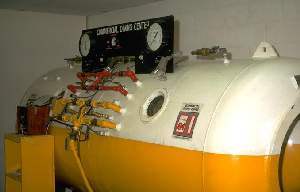
You should not ascend more than 30 feet per minute. And always do a safety stop at 15 feet for at least 3 minutes after deeper dives. After your safety stop, do not propel yourself to the surface either. Ascend that last 15 feet very slowly also.
Check your equipment
You don't want to find out the regulator doesn't work once you are underwater. Checking equipment is especially important if you are renting.
If you own your regulator and haven't dove in a while, it should also be serviced to make sure it is working properly. Do a check of the regulator hoses also. After one dive, someone bumped my husband's rental regulator and the hose snapped off. It was totally corroded inside and beginning to show on the outside. Thank God it didn't happen underwater. While this is very unlikely to happen again, I always check as well as I can.
Relax
Being relaxed and comfortable underwater is key to a successful dive. If something happens:
- Stop
- Breathe
- Think
- Act
Do not panic and rush to the surface (I know it is easier said than done). But observing this scuba diving safety rule could be key to a safe dive.
And last, but not least, our final scuba diving safety rule
Plan your dive and dive your plan
You
will hear this in your training (or you should) and you should follow
this advice. Prior to going under, you and your buddy should know the
max depth you will go, the amount of bottom time you'll have and how
much air you will start to ascend with. Check your air supply often. You
should also agree on the hand signals you will use to communicate
underwater.
This is by now means an exhaustive list, but if you follow these scuba diving safety rules, you greatly increase your chance of a safe and incident free dive. And of course that's what we all want.
So when you go diving, take your time, relax, think and go through your safety checklist.
Want to stay down longer and improve your buoyancy control and other diving skills? Our free report "Increase Your Bottom Time" along with our practical, weekly actionable tips will have you looking like a seasoned diver in no time. So come join us and see improvement on your very next dive!
(Click on the photo to join us now!)

What's New


-
Happy New Year
Jan 01, 24 06:00 AM
Happy New Year everyone! I hope everyone is well and had a fun New Years Eve! May your new year be filled with lots of wonderful dives. All the best to you and yours in 2024! Let the dives begin. -
Happy Holidays
Dec 14, 23 05:05 AM
I hope everyone is enjoying the holiday season! I am always amazed at how fast time flies and another year is just around the corner. I wanted to pop in and say hi to everyone. I am doing some full ti… -
3 Common Scuba Diving Mistakes New Divers Make
Feb 23, 23 02:18 PM
 In this video, I share 3 common scuba diving mistakes beginner divers make. Learn how to correct these for a better - and safer - dive.
 -
Scuba Diving Tipping Etiquette: How Much And When To Tip Scuba Crew
Feb 06, 23 03:34 PM
 Not sure of scuba diving tipping etiquette? In this video I share who to tip, when to tip, how much to tip, tipping on liveaboards, tipping an instructor & more
 -
Scuba Diving Tips For First Time
Jan 29, 23 05:41 PM
 These scuba diving tips for first time divers will help improve buoyancy control, air consumption, equalization and boat diving. Improve on your very next dive!
Click below to grab our free report and weekly actionable tips:

Popular Pages
 |
 |
 |
 |





Recent Articles
-
Happy New Year
Jan 01, 24 06:00 AM
Happy New Year everyone! I hope everyone is well and had a fun New Years Eve! May your new year be filled with lots of wonderful dives. All the best to you and yours in 2024! Let the dives begin. -
Happy Holidays
Dec 14, 23 05:05 AM
I hope everyone is enjoying the holiday season! I am always amazed at how fast time flies and another year is just around the corner. I wanted to pop in and say hi to everyone. I am doing some full ti… -
3 Common Scuba Diving Mistakes New Divers Make
Feb 23, 23 02:18 PM
In this video, I share 3 common scuba diving mistakes beginner divers make. Learn how to correct these for a better - and safer - dive.
New! Comments
Have your say about what you just read! Leave me a comment in the box below.